So after our class discussion on tokenism on tv, I started to think about tokenism in my everyday life. The first thing that came to mind is kind of random, but it works: My mom's office. She is a lawyer and most of her co-workers are white. And as far as gender goes, I don't know the exact count, but I would say it is split pretty evenly between men and women. But the main lawyers she works with are white. However, her paralegal, which is basically just her assistant, is an African American woman and the secretary at the front desk is also an African American woman. To me, this is a perfect example of tokenism in real life. The African American women do not have the highest paid job in the office by any means. They are there to simply assist the white lawyers who dominate the office. They are the token black workers, so the firm can say that they are diverse.
There is also tokenism at New Trier. There are not many African American teachers or faculty. I honestly cannot think of one teacher who is African American. But there are several African Americans who work on the PPS staff. And that is definitely tokenism. They are not teachers, so not in the spotlight, and they do not have the highest paid jobs, but they are there. So who could argue against New Trier that the staff is not diverse? We're diverse. Sort of. If you can call African American janitors diverse.
So those are some of the real life examples that I could think of. I had never really noticed tokenism before Mr. Bolos' discussion. But now that I'm aware of it, it's amazing how often I see it. Everyone thinks America has come so far, but how far have we've really come?
Monday, May 24, 2010

Tuesday, May 18, 2010
Data Driven Society To The Max
Yesterday in class we talked about how society is becoming increasingly more data driven. But I want to specifically elaborate on our discussion of the ACT and how it affects college admissions. Today, as most New Trier juniors know, the ACT scores from the required April test came out. I am now in the computer lab where everyone is chekcing their scores with a furious passion. Even though I was one of those students just seconds before, I realized that this is completely ridiculous. No one was happy with their scores. I hear sighs of regret in the background. New Trier is completely obsessed with data and it consumes our lives every day. But how accurate is this data?
I have a very strong opinion when it comes to the ACT. I feel that the ACT is not a good indicator of someone's abilities and knowledge, and all it measures is how much money you have. People with tutors pretty much buy their ACT score. The first time I took the ACT, I took it without any tutoring; cold-turkey as they say, and I did okay. Not spectacular, probably the average score for New Trier students. After that I got a tutor and raised my score four points. But I didn't do anything special. Sure, I took about 100 practice tests. But anyone could do that. My higher score does not show that I am magically more intelligent than I was before, it simply shows that my parents could afford to hire an ACT tutor for me. My dad and I got into a pretty heated debate about this once, and let's just say he would kindly disagree with me. He thinks that if you have the money to afford a tutor, then everything is fair game. Although I disagree with him, I understand where he's coming from. He's worked really hard his whole life in order to give his family the best. And being able to afford an ACT tutor for his teenage daughter is just the pay off for all of his hard work. But it puts everyone else who can't afford a tutor at a disadvantage. And in the words of my dad, "That's life".
I have a very strong opinion when it comes to the ACT. I feel that the ACT is not a good indicator of someone's abilities and knowledge, and all it measures is how much money you have. People with tutors pretty much buy their ACT score. The first time I took the ACT, I took it without any tutoring; cold-turkey as they say, and I did okay. Not spectacular, probably the average score for New Trier students. After that I got a tutor and raised my score four points. But I didn't do anything special. Sure, I took about 100 practice tests. But anyone could do that. My higher score does not show that I am magically more intelligent than I was before, it simply shows that my parents could afford to hire an ACT tutor for me. My dad and I got into a pretty heated debate about this once, and let's just say he would kindly disagree with me. He thinks that if you have the money to afford a tutor, then everything is fair game. Although I disagree with him, I understand where he's coming from. He's worked really hard his whole life in order to give his family the best. And being able to afford an ACT tutor for his teenage daughter is just the pay off for all of his hard work. But it puts everyone else who can't afford a tutor at a disadvantage. And in the words of my dad, "That's life".
Wednesday, May 5, 2010
Junior Theme=Life
I literally spent my entire weekend writing my junior theme. I ate, slept, read, and lived junior theme. It took me a lot longer than I thought it would; I figured out I tend to write in infrequent spurts of inspiration, but at least I have a rough draft completely done. It still needs to be edited majorly, though, so I thought I would save the week to do that. I also finished my annotated bibliography which I think is pretty good. The librarians' comments have been super helpful, so thank you!
Last night I transcribed my interview with Dr. Easton, which only took me like two hours, so that was a whole lot of fun. But again, at least it's done. I decided to just get that all over with last night, instead of working on it the entire week like I thought I would do.
But I think that's about it. I got my rough draft done. I typed out my interview. I finished my annotated bib. Oh yes, I knew I was forgetting something. I still have to talk with some people for the peer to peer requirement so I can add some little tid bits into my paper, but other than that (for reals now) I don't think there's a whole lot to be done. Just editing. Hopefully no all nighters this week.
TO DO LIST: 1) Talk with people for the peer to peer requirement
2) Edit!
3) Turn in paper and get an A++!
Last night I transcribed my interview with Dr. Easton, which only took me like two hours, so that was a whole lot of fun. But again, at least it's done. I decided to just get that all over with last night, instead of working on it the entire week like I thought I would do.
But I think that's about it. I got my rough draft done. I typed out my interview. I finished my annotated bib. Oh yes, I knew I was forgetting something. I still have to talk with some people for the peer to peer requirement so I can add some little tid bits into my paper, but other than that (for reals now) I don't think there's a whole lot to be done. Just editing. Hopefully no all nighters this week.
TO DO LIST: 1) Talk with people for the peer to peer requirement
2) Edit!
3) Turn in paper and get an A++!
Tuesday, April 27, 2010
Junior Theme Update
This weekend I had my interview with Dr. Easton. He turned out to be the perfect person to interview because he was so knowledgeable and just had a lot to say. I wasn't sure if he was going to be able to respond to all the questions, since they dealt with a wide variety of topics, but he answered all of them and knew a lot about all of them too. I learned a lot from him and the interview gave me new things to look at that I hadn't necessarily gone into before.
Also over the weekend I started to write a body paragraph like Mr. O'Connor and Mr. Bolos said to do. Originally I thought I was go straight into discussing lobotomy, but after I thought about it, I thought that it might be better to give a brief (or at least as brief as I could make it) description of treatments in the early 20th century. Since my Why Question deals with treatment for mental illness dramatically changing, I thought that it would help readers to know where we were coming from to better understand where we are today. And that would also show how dramatically treatments really have changed. But I'm not sure if that's what Mr. O'Connor and Mr. Bolos are looking for because it's not really analytical it's just historical information. So I'm not really sure what I'm going to do about that.
It's getting pretty stressful because there are a lot of big decision that I need to make for my paper. After looking at some sample essays in class yesterday, and how much it was scrutinized to every last detail, I'm a little worried about what the class would say about my paper if they saw it. But I'm trying to work on it every night and I'm still doing research and I still need to finish my annotated bib.
THINGS TO DO:
1) annotate bibliography
2) type transcript of interview
3) continue research
4) keep writing!
Also over the weekend I started to write a body paragraph like Mr. O'Connor and Mr. Bolos said to do. Originally I thought I was go straight into discussing lobotomy, but after I thought about it, I thought that it might be better to give a brief (or at least as brief as I could make it) description of treatments in the early 20th century. Since my Why Question deals with treatment for mental illness dramatically changing, I thought that it would help readers to know where we were coming from to better understand where we are today. And that would also show how dramatically treatments really have changed. But I'm not sure if that's what Mr. O'Connor and Mr. Bolos are looking for because it's not really analytical it's just historical information. So I'm not really sure what I'm going to do about that.
It's getting pretty stressful because there are a lot of big decision that I need to make for my paper. After looking at some sample essays in class yesterday, and how much it was scrutinized to every last detail, I'm a little worried about what the class would say about my paper if they saw it. But I'm trying to work on it every night and I'm still doing research and I still need to finish my annotated bib.
THINGS TO DO:
1) annotate bibliography
2) type transcript of interview
3) continue research
4) keep writing!
Thursday, April 22, 2010
And I Have an Intro!
I procrastinated all night, putting off my intro until the last possible moment. But I did it and I'm actually really happy with it. It took me about an hour to write, which is way longer than I had thought it would take. But I was so excited to finally finish it that I even read it to my brother at 11:30 at night and he could've probably cared less about it. But it's done! Hooray!
Now I'm wondering if I should start writing the rest of my paper. I haven't scheduled my interview yet, but I know who I'm interviewing, as I explained in my last blog post, so I don't think it will be a problem. But I still feel like I don't have enough information. I'm thinking that as I start to write the paper I'll figure out what information I actually need and that can help to refine my searches. But other than that I'm not too worried. Every night I have been researching my topic and looking for articles. I just wish that we had some sort of timeline/deadlines because I think that would really help me. Right now I feel like I'm just floating around in a pool not really knowing what direction I'm going in. I liked the deadline for the intro because then I actually got it done. I mean, it's not like I'm not going to write the paper, but with deadlines you can do it in increments instead of one big, hurried chunk. For some reason this year, with every paper I write, it takes me such a long time to put words onto the page. I have to think so hard about each word and how it's phrased that it just ends up taking me a really long time to do.
So the game plan: do a little more research and start writing!
Things to do: 1) schedule interview
2) think of interview questions
Now I'm wondering if I should start writing the rest of my paper. I haven't scheduled my interview yet, but I know who I'm interviewing, as I explained in my last blog post, so I don't think it will be a problem. But I still feel like I don't have enough information. I'm thinking that as I start to write the paper I'll figure out what information I actually need and that can help to refine my searches. But other than that I'm not too worried. Every night I have been researching my topic and looking for articles. I just wish that we had some sort of timeline/deadlines because I think that would really help me. Right now I feel like I'm just floating around in a pool not really knowing what direction I'm going in. I liked the deadline for the intro because then I actually got it done. I mean, it's not like I'm not going to write the paper, but with deadlines you can do it in increments instead of one big, hurried chunk. For some reason this year, with every paper I write, it takes me such a long time to put words onto the page. I have to think so hard about each word and how it's phrased that it just ends up taking me a really long time to do.
So the game plan: do a little more research and start writing!
Things to do: 1) schedule interview
2) think of interview questions
Friday, April 16, 2010
Life and Times of Junior Theme
Well junior theme is still stressing me out. I have a vague idea for a thesis but I still need to research my arguments. I read "Girl, Interrupted" and last night I finished another book called "Mad in America," which was extremely helpful. It gave me a ton of information and a great historical context. But I think I'm definietly lacking in other sources. I have two books but I don't have many sources from the databases. I'm trying to look for some useful articles.
Also, I wasn't sure if Mr. O'Connor and Mr. Bolos were kidding about having an intro done. I thought they were serious but everyone else told me that they were kidding, but now I think that they were actually serious which kind of worries me. I don't have a clear thesis statement yet and I'm not completely sure what my arguments are going to be because I feel like I still need to do a ton of research.
As for the interview, I have not yet e-mailed the person, (I'm planning on interviewing my friend's dad who works for the psychiatric ward at Rush Hospital) but I'm not really worried. We're practically neighbors so I'm sure he'll be able to fit in an interview some time. So that's pretty much all that's going on concerning junior theme.
Also, I wasn't sure if Mr. O'Connor and Mr. Bolos were kidding about having an intro done. I thought they were serious but everyone else told me that they were kidding, but now I think that they were actually serious which kind of worries me. I don't have a clear thesis statement yet and I'm not completely sure what my arguments are going to be because I feel like I still need to do a ton of research.
As for the interview, I have not yet e-mailed the person, (I'm planning on interviewing my friend's dad who works for the psychiatric ward at Rush Hospital) but I'm not really worried. We're practically neighbors so I'm sure he'll be able to fit in an interview some time. So that's pretty much all that's going on concerning junior theme.
Tuesday, April 6, 2010
Junior Theme: My Sweat and Tears
The start of the infamous (and sometimes feared) junior theme has brought some added stress into my life, but not as much as I expected. The most stressful part for me so far is actually choosing a topic and a good book to go along with that topic. Many times I've felt lost, like I had absolutely no idea what I was doing. But today I made a major breakthrough. I've finally decided on a topic that, as of now, I plan to stick with. And that is: mental illness. I'm not exactly sure which direction I'm going to take with it, but I know that it's going to be about the treatment of mental illness, specifically.
Before deciding on my (hopefully) final topic, I was thinking about researching prescription drug abuse and depression. But after doing a little research on depression and reading a little blurb about the history of mental institutions and the treatment of mental illness in general, I decided to switch to that. It just seems more interesting and like something I won't get bored of. So now that I know what I want to do, the problem lies in finding a book. The two books that I'm thinking about are "One Flies Over the Cuckoo's Nest" and "Girl, Interrupted." They were both made into movies so which ever book I don't read, I figure I can just see the movie. But I'm not sure which book would be more helpful for my research. "One Flies Over the Cuckoo's Nest" is fiction and "Girl, Interrupted" is based on the author's real experiences, so that's why I'm not sure which one I should read. I also asked my mom for any suggestions and she told me about the movie called "Frances Farmer." The movie was made in the 80's and it's based on the true strory of Frances Farmer who was committed to a mental institution, so I'll definitely see this movie.
So I guess what I really need to work on is finding a book. I'm glad that I at least have a topic but I also need to formulate some more WHY Q's. So that's the end of my first junior theme update!
Before deciding on my (hopefully) final topic, I was thinking about researching prescription drug abuse and depression. But after doing a little research on depression and reading a little blurb about the history of mental institutions and the treatment of mental illness in general, I decided to switch to that. It just seems more interesting and like something I won't get bored of. So now that I know what I want to do, the problem lies in finding a book. The two books that I'm thinking about are "One Flies Over the Cuckoo's Nest" and "Girl, Interrupted." They were both made into movies so which ever book I don't read, I figure I can just see the movie. But I'm not sure which book would be more helpful for my research. "One Flies Over the Cuckoo's Nest" is fiction and "Girl, Interrupted" is based on the author's real experiences, so that's why I'm not sure which one I should read. I also asked my mom for any suggestions and she told me about the movie called "Frances Farmer." The movie was made in the 80's and it's based on the true strory of Frances Farmer who was committed to a mental institution, so I'll definitely see this movie.
So I guess what I really need to work on is finding a book. I'm glad that I at least have a topic but I also need to formulate some more WHY Q's. So that's the end of my first junior theme update!
Tuesday, March 23, 2010
Blagojevich on "Celebrity Apprentice"
For the past couple of weeks I have seen various commercials for "Celebrity Apprentice" and happened to see that Illinois' former governnor, Rod Blagojevich is one of the contestants this season. Personally, I am outraged. Blagojevich should be in jail, not on a reality t.v. show. He has used his 15 minutes of fame (and the kind of fame that no one should want) to transform himself into some sort of a celebrity. Before signing on for "Celebrity Apprentice" Blagojevich was originally going to be on a different reality show called "I'm a Celebrity... Get Me Out of Here!" However, since he is charged with a multitude of crimes, the judge said that he could not participate in the show. But never fear, his wife gladly stepped up and took the role instead. I think it's totally disgusting that Blagojevich would do something like this. He is not a celebrity; he is criminal who has made Illinois the laughing stock of the country. And the media is treating this like it's no big deal. It's like "Hey, if the whole governor thing doesn't work out, just join 'Celebrity Apprentice!'"Another thing that bothered me was the way Blagojevich's little biography is worded on the show's website. It says that Blagojevich was "hijacked from office." He was "hijacked" because he broke the law! That's usually what happens in these kind of situations. I think Blagojevich being in "Celebrity Apprentice" not only gives Illinois a bad rep, but it gives our entire country a bad rep. It's like the media is just shrugging off all of his wrong-doings and glorifying a man who does not deserve to be glorified. It sheds a bad light on American politics, if you ask me, and it definitely does not present a good image of America.


Thursday, March 18, 2010
Some More Commentary on Cigarette Advertising...
After reading both Maeli and Ruchi's blogs about cigarette advertising I decided I wanted to blog about the same thing since I find this topic to be rather interesting. So I guess I'll just elaborate/restate my comments that I wrote on their blogs.
Yesterday afternoon I talked to my mom about this and she said that when she was growing up, she saw commercials on t.v. all the time for cigarettes. Now, televised commercials for cigarettes are banned. (Here is a little history of cigarette advertising throughout the years). But print ads and billboards are still allowed, of course; it's the tobacco industry after all. But it's interesting to note where you see the ads. You're not going to find Camel ads in Seventeen magazine or Tiger Beat. Now that would be corrupting little kids' minds. But you'll definitely see them in Sports Illustrated, Cosmopolitan, and Rolling Stone magazine. This website actually lists the magazines that cigarette ads are published in and a little description of the ad as well. You can really tell the targert audience for the ads just by the magazine that the ad was published in. For example, from the website linked above, I saw that a cigarette ad was published in Cosmopolitan and the description of the ad was "winter mocha mint- warm toffee." Just taking a guess, I think women are more likely to buy cigarettes that are describes as "winter mocha mint" than men, and that's probably why it was published in Cosmopolitan.
Like Ruchi talked about in her blog, I think cigarette sales have a lot to do with their packaging. As I saw in France, there is a brand of cigarettes called "Pink Elephants" and the cigarettes are entirely pink. I don't know how many men are going to buy pink cigarettes, so you can really tell what kind of people this brand is targeting. As Ruchi also mentioned in her blog, Camel was targeting women in their ads, as well, with cigarettes being described as "light and luscious." It's interesting to see how cigarette ads tremendously vary by gender.
So as I walking to my car yesterday afternoon I was trying to think of something to blog about, and being really desperate I looked at the ground to see what kinds of things people litered on the sidewalk near the school. And it actually turned out to be very interesting. This is what I saw: cigarette butts, empty cigarette boxes, and a Ghiradelli chocolate wrapper. Cigs and desginer chocolate. That's the North Shore for ya I thought. Any thoughts?
Yesterday afternoon I talked to my mom about this and she said that when she was growing up, she saw commercials on t.v. all the time for cigarettes. Now, televised commercials for cigarettes are banned. (Here is a little history of cigarette advertising throughout the years). But print ads and billboards are still allowed, of course; it's the tobacco industry after all. But it's interesting to note where you see the ads. You're not going to find Camel ads in Seventeen magazine or Tiger Beat. Now that would be corrupting little kids' minds. But you'll definitely see them in Sports Illustrated, Cosmopolitan, and Rolling Stone magazine. This website actually lists the magazines that cigarette ads are published in and a little description of the ad as well. You can really tell the targert audience for the ads just by the magazine that the ad was published in. For example, from the website linked above, I saw that a cigarette ad was published in Cosmopolitan and the description of the ad was "winter mocha mint- warm toffee." Just taking a guess, I think women are more likely to buy cigarettes that are describes as "winter mocha mint" than men, and that's probably why it was published in Cosmopolitan.
Like Ruchi talked about in her blog, I think cigarette sales have a lot to do with their packaging. As I saw in France, there is a brand of cigarettes called "Pink Elephants" and the cigarettes are entirely pink. I don't know how many men are going to buy pink cigarettes, so you can really tell what kind of people this brand is targeting. As Ruchi also mentioned in her blog, Camel was targeting women in their ads, as well, with cigarettes being described as "light and luscious." It's interesting to see how cigarette ads tremendously vary by gender.
So as I walking to my car yesterday afternoon I was trying to think of something to blog about, and being really desperate I looked at the ground to see what kinds of things people litered on the sidewalk near the school. And it actually turned out to be very interesting. This is what I saw: cigarette butts, empty cigarette boxes, and a Ghiradelli chocolate wrapper. Cigs and desginer chocolate. That's the North Shore for ya I thought. Any thoughts?
Tuesday, March 9, 2010
A Change of Scenery
Over the weekend I ventured past the boundaries of the North Shore, and keeping in mind last week's discussion of the physical differences between towns even within 30 minutes of us, I noticed these differences almost immediately. I remember Mr. Bolos saying how there was nowhere to quickly buy a sandwhich near New Trier. I hadn't really though about this before, but I realized that he was right. There are no fast food restaurants near New Trier. You would have to drive all the way to downtown Winnetka to the one McDonald's there, or a mall to get to the food court. So driving down the main road through this unknown town, I saw that the entire road was almost virtually composed of fast food restaurants. Any fast food restaurant that you could possibly think of was on this road. The nicest sit-down restaurant I saw was Chili's. And the stores that lined the street were all discount type of stores like Old Navy and Nordstrom Rack. And with these simple observations, I think I finally realized how incredibly different the North Shore was from everywhere else; it is a place where sit-down restaurants are the norm and Old Navy is a 30 minute drive away. It's not like I had never seen places like this before, but I had just never fully taken into account these differences and made something of it. It was like I was looking at the same thing only with different eyes.
Thursday, March 4, 2010
Life and Times of the North Shore: Some Memoirs
So with all this discussion about social class, I thought I should write something about it. So I decided to write about some stories that happened to me (related to social class, of course). I remember in junior high, teachers would constantly make comments to us about how we lived in the North Shore. Before 6th grade, I was pretty naive and didn't really know the status of the North Shore. I had never been exposed to anything else, so I thought that the life I lived was like everyone else's in the world. Obviously I was wrong. But anyhow, starting about 6th grade the comments started. It came first from my gym teacher. I can't remember exactly what she said, but it was something along the lines of how we wouldn't have to worry about the same kind of things as her because we lived in the North Shore. And in 7th grade, one of my teachers asked us to bring in a binder the next day. Naturally, we all started to complain. How would we have enough time to get a binder by tomorrow? And then my teacher freaked out a little and said, "You live in the North Shore. You can afford it." I don't mean to talk bad about my past teachers. But these are the times that I most remember my social class being brought up by own teachers. Even as I think about it now, I find it a little strange that teachers would say something like that to little kids.
So that was in junior high. And I went to a pretty homogenous junior high. Practically everyone was white and we were all pretty much in the same boat, so to speak. But interestingly, I noticed that once I got to high school, the comments about living in the North Shore stopped. The beginning of high school also marked the time that I truly opened my eyes to the world. I realized that the world is a pretty big place, and not everyone was like me. Not everyone was in the same boat as me anymore. There were people who had to worry about money on a daily basis, which is something I was not really used to at the time. Suddenly, social class actually meant something to me. So like the title says, these are just some memoirs from living in the North Shore.
Fin.
So that was in junior high. And I went to a pretty homogenous junior high. Practically everyone was white and we were all pretty much in the same boat, so to speak. But interestingly, I noticed that once I got to high school, the comments about living in the North Shore stopped. The beginning of high school also marked the time that I truly opened my eyes to the world. I realized that the world is a pretty big place, and not everyone was like me. Not everyone was in the same boat as me anymore. There were people who had to worry about money on a daily basis, which is something I was not really used to at the time. Suddenly, social class actually meant something to me. So like the title says, these are just some memoirs from living in the North Shore.
Fin.
Saturday, February 27, 2010
2nd Edition: And The Winner Is... America!
And how about some more opinions on the Olympics? The other day I was watching speed skating because I absolutely love Apolo Ohno for some reason. And then... he didn't win. I was sad yes, but I was very surprised. I was just so used to him winning that I didn't even think him losing would even be a question. Actually I was just so used to America winning in general that I didn't think it could be any other way. That sounds really conceited, but it's true. I just assumed that America would always win, which again sounds terrible, my apologies. And it was also a little surprising when I saw the medal count on t.v. We're not in first for gold medals- Canada is- but we do have the most medals overall, with Germany right behind us. I guess that's not so surprising, but I wondered why this was. Why does America always seem to take gold? Or how is it that we don't have the most gold medals, but somehow we still have the most medals overall? I answered this question with a similar answer that I wrote about in an earlier blog post about why New Trier always wins everything (And the Winner Is... New Trier! Duh). I think America wins a lot of the events simply because it is such a big country and there are more people to choose from. Compared to other countries, America is huge! If you compare the United States to Monaco for example, which is the second smallest country in the world after Vatican City, which is technically the smallest country in the world, I think you can see a big difference. Especially when it comes to the Olympics, America has a huge advantage. Where America has 308,771,065 people to choose from (source) Monaco has only about 32,000 people to choose from. So America has about 9,600 times more people to choose from than Monaco. That's just an example, but still. But it definitely raises the global competition a little. So that's my theory. America just has a lot more people to choose from than other countries, and that's we win a lot. Any thoughts?
Wednesday, February 24, 2010
Money for Medals
 Last night as I was passing through the kitchen where the news was blaring on the t.v., I happened to overhear one of the news reporters talk about the incentives for Olympic athletes. And apparently, if an athlete medals, they are awarded $25,000 for gold, $15,000 for silver, and $10,000 for bronze. I had always wondered whether Olympic athletes got paid or not, but it seems a little outrageous to me. $25,000 for gold?! Seriously? And what about people who win multiple gold medals? According to the New York Times 2008 Beijing Olympics medal count, the United States won 36 gold medals which adds up to $900,000, almost a million dollars going to gold medalists. But we also won 38 silver and 36 bronze medals, so in total we dished out a total of $1,830,000 to athletes. That's a lot of money. And where exactly does it come from?
Don't get me wrong, I think it's a good thing to award Olympic athletes for their success. They're representing America and making everyone proud with their efforts so I think they deserve something. But $25,000 for a gold just seems like a lot of money to me. I also thought about the athletes' reasons for going to the Olympics. Do they go just for the cash incentives or do they go because they are truly passionate about their sport? I feel like they have to be passionate about it because most athletes spend their entire lives training, so if they didn't love their sport, they probably would have quit long ago. But I don't know. Do you think Olympic athletes get paid too much? Not enough? Or shouldn't be paid at all?
Saturday, February 20, 2010
Strength and Pain
A few days ago in class we discussed the difference between men's and women's sports and athleticism and all that good stuff. But this reminded of this theory I have. First, I think it can be universally aknowledged that men are more physically built than women. Men are just naturally stronger than women. But this is where my theory comes in. I think women can handle more pain than men. And I look at this from two ways: personal experience and biologically. First the personal experience. Whenever I have a stomach ache or a headache, I still go school. I pop an advil and suck it up. But my brother, and not to beat on him or anything, but if he gets a stomach ache at school, he comes home. Maybe it's just him, but a little stomach ache never gave me a reason to go home. Ok, and now looking from a biological standpoint. From what I hear childbirth=pain, and lots of it. If men were the ones to give birth, there's wouldn't be any people left. But like I said, it's just a theory, and it's very hard to prove either way. In fact, in this article from MedicineNet, it says that "there are so many overlays of societal and cultural norms and other factors that go into the reporting of pain that it may not have a biological basis at all." This article suggests that men have a higher tolerance to pain than women. They concluded this by performing different pain tests on both genders, including tolerance to heat. However, the article also acknowledges that the experiments can sometimes be inaccurate, and that there are many factors to be considered. But I stand by what I said: men are physically stronger than women, but women can handle more pain than men. What do you think?
Tuesday, February 16, 2010
Little Black Dress: Remix
 A few months ago as I was flipping through my Teen Vogue magazine, a particular Marc Jacobs ad stuck out to me. I'm usually drawn to his ads because of their artistic value, but this one was different. It was a male model modeling women's clothes. He was wearing a mini skirt, a skimpy top, and holding a purse. I thought it was a little odd, but thought that Marc was just trying to be artsy. But as I thought about it more, I started to do a non-intentional "See, Think, Wonder" in my head. I wondered why Marc Jacobs would choose to have a man model what was obviously women's clothes. I don't think he's trying to say that his women's clothes can also be worn by men, because somehow I don't think men in dresses is really going to catch on. But perhaps he's trying to make a much bigger statement about gender roles.
Friday, February 12, 2010
Reparation Time
Reparations. Good or bad? In my opinion, sometimes good, sometimes bad. And it depends on the case. I was surprised to learn yesterday how Germany has been giving Israel cars and other expensive goods since after WWII. For me, this is not an acceptable reparation. I'm sure Israel gladly accepts all the expensive things, I mean, who wouldn't? But it bothers me because it's like "Hey, sorry for killing 6 million of your people, here's some money." It's just too little too late. However, I do think it's time for the United States to officially apologize for slavery. I don't think cash payments or tax breaks or anything like that would help anything; again, I think it's too little too late. But a sincere apology from the government would really make a difference. We also discussed yesterday about a slavery museum in Washington DC. I think that would be an amazing idea. There's a Holocaust museum, why not a slavery museum? Honestly it's a shame there isn't one up yet.
Reparations cannot replace a genuine apology. Any group of people would gladly accept reparations. Seriously, like I said before, why wouldn't you take free money or free tuition to college? But it will never erase the hurt and pain people felt. An apology is the best thing anyone can do to start making up for something.
Reparations cannot replace a genuine apology. Any group of people would gladly accept reparations. Seriously, like I said before, why wouldn't you take free money or free tuition to college? But it will never erase the hurt and pain people felt. An apology is the best thing anyone can do to start making up for something.
Tuesday, February 9, 2010
Be Your Own Hero!
I know I always blog about movies, but I'm going to do it again. This time it's about "Whip It," a movie about a girl who follows her dream and joins a roller derby team. For some reason I found this movie to be extremely inspirational. It's just something I would never do. It sounds so simple, "follow your dreams," how hard could it be? But I feel like no one every does that anymore. Especially in my life, I feel like there's a set plan and I can't go outside those boundaries. I wish I could just go out and do something crazy like join a roller derby team; or just do something that actually made me happy. Sometimes you just have to do something to do it, not necessarily because it will further you in the "all mighty life plan."One of the reasons I liked the movie so much is because no one really approved of the main character joining the roller derby team, but she did it anyway because she loved doing it. I really admire that quality in people and wish I could find it in myself. I can't remember the last time I did something for myself. Truly for myself. So for some last inspirational words, I am going to quote Maggie Mayhem: "Be your own hero!"


Wednesday, February 3, 2010
Religion: Good or Bad?
Earlier this week we learned about women's history with the herstory projects. During the presentation on Sojourner Truth, someone noticed that in her speech, Sojourner Truth used religion to justify equal rights for women when she said: "Whar did your Christ come from? From God and a woman! Man had nothin' to do wid him." I found this particularly interesting because I notice how people always use religion to justify things, which is my main problem with religion.
In this case Sojourner Truth used religion to justify a worthy cause. But that is too often not the case. Religion, when practiced in its truest and purest form, is the best thing ever created in this world. It brings people together, encourages people to be the best they can be, and gives people hope and faith, which is absolutely necessary to live a happy, or at least not totally depressed life. However, so many people have manipulated their religion into something it's not, and have used it to justify the killing and persecution of others. Religion is at the heart of many conflicts and wars, and if it is not the direct cause of conflict, it is the reason power hungry leaders give. Take the entire history of Jerusalem, for example. There have been religious wars over Jerusalem for thousands of years, with millions of people dying in God's name, and more dying every day for the same plot of promised land as they have been for centuries.
The struggle over Jerusalem was the first religious conflict that came to mind. But there are so many more. But not only wars are sparked by religion, but people too often use religion to justify something or persecute a group of people. In Sojourner Truth's case, she used religion to justify something good, but like I said, I feel like people often use religion to justify bad things. First and foremost, earlier this year we discussed how religion was used to justify slavery, and we all know how that ended. But in more recent times, people have used the Bible to "prove" that being gay or lesbian is unnatural, and that's why gay marriage should be illegal. People have also used the Bible to "prove" that abortion is wrong. It seems like you can use the Bible to justify anything and everything, but that doesn't make it right. We have let one book that is thousands of years old guide us though the centuries, even as the times have dramatically changed in so many ways. Don't get me wrong, I'm not against religion. As I said before, religion could be the greatest thing ever to be created. It just saddens me that it has been used, and still is used, to kill and persecute so many people. Sometimes I wonder if religion does more bad than good for the world. Does the good outweigh the bad?
Friday, January 29, 2010
Some Incentives
 Earlier in the week we talked about some of the incentives we encounter in our own lives. With that in mind, while I was watching Obama give his first State of the Union Address (here is a transcript of the full speech), I noticed that he mentioned several times, incentives for things. I found this to be very interesting because the other day when I was trying to think of incentives in my own life, I couldn't. I just couldn't think of anything that I was rewarded for doing, or anything like that. So when I heard President Obama use the word or suggested anything reward-like during his speech, it stuck with me.
 Most of the incentives Obama proposed had to do with money, like tax breaks for example. He said that he would "give those tax breaks to companies that create jobs right here in the United States." He also mentions in the same paragraph that he will "give rebates to Americans who make their homes more energy-efficient." Many of his incentives also deal with clean energy: "But to create more of these clean energy jobs, we need more production, more efficiency, more incentives," because, "providing incentives for energy-efficient and clean energy are the right thing to do for our future." I just found it to be so interesting that he is explicitly offering rewards for doing good. And it was very ironic to me that just a day before his speech I couldn't think of one incentive in my life, and then here he was, the president, giving me some right to my face. Well, not really me exactly, but you get the point!
But wait, that's not all! Just when you think he's done with this whole incentive thing, he does it again! During his section on education he says: "Instead of rewarding failure, we only reward success." I found it particularly interesting that in this line he uses "reward" instead of "incentive." "Reward" sounds more like something you would say to a child, and "incentive" more like something you would say to an adult. I guess I felt a little like a child again. Not that I think it sounded bad in his speech, because I don't think it did. Perhaps he was hoping to connect to his younger audience who are in still in school, as a way to encourage them. It's interesting (I know that I'm using the word "interesting" a lot, sorry!) the way he is planning on using incentives to get things accomplished. But sometimes that's what has to be done. Without something to gain for themselves, people won't always do things for the greater good. Hopefully his incentives will help get America back on track, but do you think it will work? Is he offering a big enough incentive? Too much? Does his constant mention of incentives reflect badly on our society?
Monday, January 25, 2010
It Was "Lost" or the President, And the People Chose "Lost"
As some people may know, President Obama will give his first State of the Union Address this Wednesday, January 27th. However, this was not the original date scheduled for President Obama to give it.
I was informed some weeks ago that the State of the Union was scheduled for the same night as the "Lost" season 6 premier, on February 2nd. Many "Lost" fans were outraged by this and according to the preceding links, "prompted its avid watchers to launch a protest on Twitter against the potential scheduling conflict" and "inspired Facebook pages protesting how airing 'Lost' on time was more important than the State of the Union." And that's how the date of the Sate of the Union was changed.
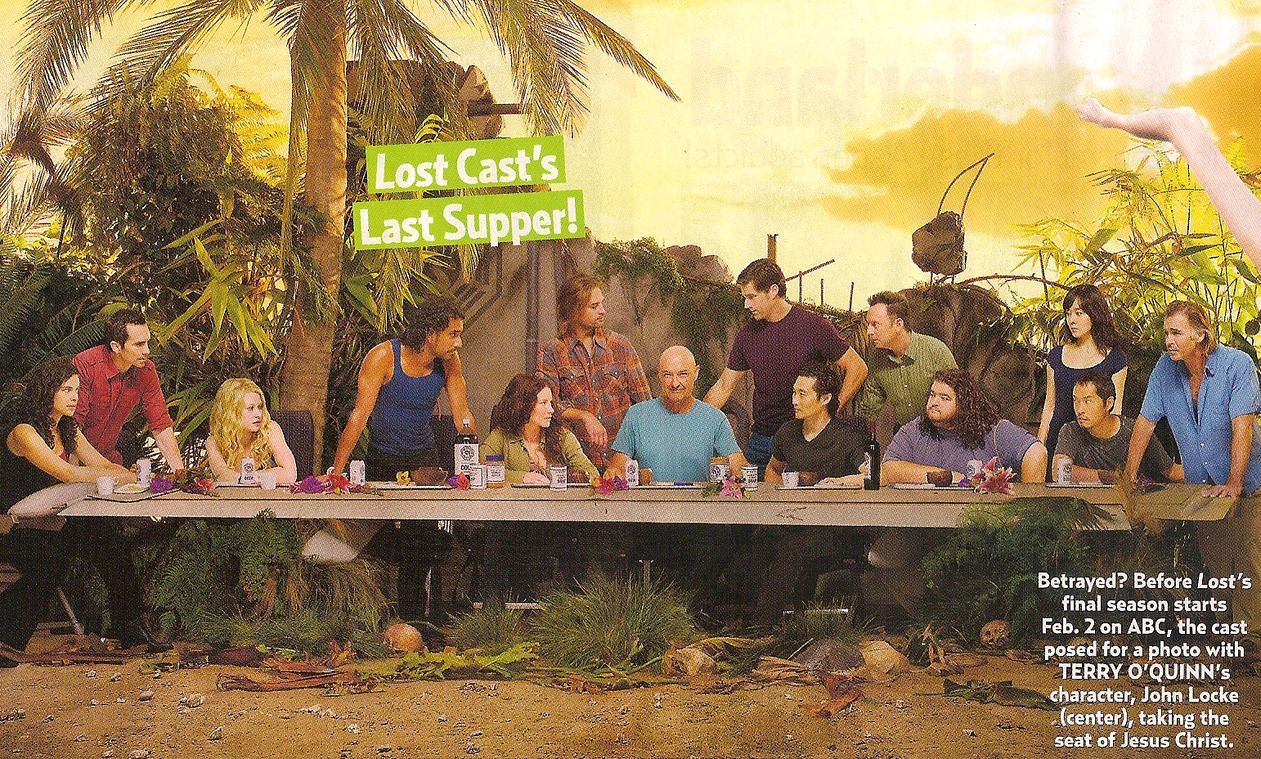 As a devout Lostie myself, I completely see where these fans are coming from. I admit that Twitter and Facebook protests are a little outrageous, but I have been waiting for season 6 to come since seventh grade and have the full intent of watching the 2 hour premier at the exact time it airs. And if that means missing President Obama's first State of the Union, then that's just too bad, that's what Tivo is for I guess. I know it sounds bad, but it's the truth. It shows the intensity that "Lost" fans have, or as some non-fans would say, the weird obsession that we have. Nonetheless, this little uprising of Lost fans made me think. It's kind of sad that we live in a society that would rather watch "Lost" than find out how our country is doing. More than that, go as far as protesting against the date of the State of the Union. I've never heard of such a thing like this before. It's just so extreme. Furthermore, I wouldn't have thought that the President would comply with the Losties, but in this society I suppose anything is possible. The Losties are an intense crowd and they get what they want.
Friday, January 22, 2010
Genius or Insanity?
"Sometimes, for an artist, the only difference between insanity and genius is success."
 This quote was taken from an episode of "Criminal Minds," a show about FBI profilers from the Behavioral Analysis Unit (BAU). It was used to describe a comic book writer turned serial killer, but that's beside the point. When you first read the quote, it sounds like just another t.v. show line, but I think it actually holds a lot of truth. There are so many artists that are just plain crazy, but absolute geniuses. And in agreement with the above quote, I believe that the reason many artists are able to achieve genius status is because of their success. An artist that I think foloows this quote to the dot is Van Gogh. Van Gogh is notorius for being the "crazy" artist, I suppose; at least the one who cut off his ear, and that's pretty insane if you ask me. Furthermore, towards the end of his life, he check himself in to a mental institution. According to the link above about him, while he was at the institution, he completed 150 paintings including one of his most famous: "Starry Night." During his lifetime, I can guess that he was most likely seen as just plain insane, considering he didn't achieve any real success during his life, selling only one painting according to the link above. Now, he is obviously seen in a different light, as one of the best painters to ever live. And I truly believe that his later success after his death played a key role in his transition from insanity to genius in the eyes of society.
 Another artist that this quote made me think of is Andy Warhol. Contrary to what the quote states, Andy Warhol managed to be insane and a genius at the same time, which definitely takes skill. His success did not separate him from the insanity category, but merely added him to the genius category as well. One could also relate Andy Warhol's situation with Michael Jackson's. Both were geniuses, but seen as crazy at the same time, despite their success.
 In a way, I think that all artists need to be a little crazy, otherwise they don't stand out. I just feel bad for the insane geniuses who never become successful, so they're just stuck being insane. And that's no fun, now is it?
Friday, January 15, 2010
A Selective History
I recently finished a book called "The Historian," by Elizabeth Kostova. It is about the legend of Dracula, but it deals a lot with Eastern European history, particularly the histories of Romania, Bulgaria, and Turkey. This made me realize that before reading this book, I basically had no knowledge of these countries, all I knew was that they existed, which isn't really saying a whole lot. And this made me wonder why I didn't know about their histories and many other country's histories. Why do I know nothing about the history of Argentina, the Ukraine, or New Zealand? Why is my only knowledge of Scottish history coming from a scraggly Mel Gibson in "Braveheart"? I guess my ultimate question is why do some histories seem more important than others? I studied the Ancient Greeks and Romans from 6th grade to freshman year. But before freshman year I had no previous knowledge of the Middle East or Chinese history. Why is it okay for 6th graders to learn about Ancient Greece, but not about Islam? I realize that elementary school has to create a foundation of knowledge for its students, but it troubles me that before high school I only knew a lot about the same three countries: America, Ancient Greece, and Ancient Rome. But who makes these decisions? Who decides what history is important, and what history is not important? And most importantly, WHY?
Tuesday, January 5, 2010
Talented? or Marketable?
A little before winter break, I went to two very different concerts: Imogen Heap and the B96 Jingle Bash. Imogen Heap was at a very small venue; I would guess that there were about 300 people there and attracted a crowd that was mostly older than me. The B96 Jingle Bash was not at all like this. It was a huge venue; thousands of people were there. And the crowd was not like city dwellers at Imogen Heap. It was mostly girls my age or younger screaming there little hearts out for Justin Bieber.
After going to both these concerts I noticed a significant difference between the music itself. At the Imogen Heap concert, she was on the stage making the music herself with various instruments and sound tools. During several songs, she would start and then stop suddenly saying: "I think I'm going to start over." I thought this was interesting because I had never seen an artist do this before. I was amazed because I realized that she had the option to stop because she was actually creating the music herself, unlike a lot of artists these days whose music just comes blaring out of gigantic speakers, and you have to wonder if they're really singing at all, or just lip syncing. It was genuine and that's what I liked about it.
This got me thinking to the types of artists at these two concerts. In my opinion, Imogen Heap is a very talented artist, with genuine talent, but she is not widely known. But the performers at the B96 Jingle Bash who are very popular, like Sean Kingston, Jay Sean, and of course Justin Bieber, do not posses the genuine talent that I see in other artists. And here comes the connection to our class discussion during the past two days about advertising targeted at children. It's not just toys and food targeted at children: It's also singers and actors. These days an artist doesn't have to be talented, they just have to be marketable. Take Hannah Montana and the Jonas Brothers for example. Contrary to what most young girls would say, I do not think these singers posses any real talent. They are just able to market themselves extremely well, and like some people were saying "brainwash" kids into liking them. So my question is how have we allowed advertisers to overlook true talent like I saw at the Imogen Heap concert, and advertise crap artists? I want to hear about talented artists, not ones that are just an advertisement to get me to buy t-shirts and Hannah Montana wigs.
After going to both these concerts I noticed a significant difference between the music itself. At the Imogen Heap concert, she was on the stage making the music herself with various instruments and sound tools. During several songs, she would start and then stop suddenly saying: "I think I'm going to start over." I thought this was interesting because I had never seen an artist do this before. I was amazed because I realized that she had the option to stop because she was actually creating the music herself, unlike a lot of artists these days whose music just comes blaring out of gigantic speakers, and you have to wonder if they're really singing at all, or just lip syncing. It was genuine and that's what I liked about it.
This got me thinking to the types of artists at these two concerts. In my opinion, Imogen Heap is a very talented artist, with genuine talent, but she is not widely known. But the performers at the B96 Jingle Bash who are very popular, like Sean Kingston, Jay Sean, and of course Justin Bieber, do not posses the genuine talent that I see in other artists. And here comes the connection to our class discussion during the past two days about advertising targeted at children. It's not just toys and food targeted at children: It's also singers and actors. These days an artist doesn't have to be talented, they just have to be marketable. Take Hannah Montana and the Jonas Brothers for example. Contrary to what most young girls would say, I do not think these singers posses any real talent. They are just able to market themselves extremely well, and like some people were saying "brainwash" kids into liking them. So my question is how have we allowed advertisers to overlook true talent like I saw at the Imogen Heap concert, and advertise crap artists? I want to hear about talented artists, not ones that are just an advertisement to get me to buy t-shirts and Hannah Montana wigs.
Sunday, January 3, 2010
Red Nails and Army Boots
Red nails and army boots.
Diamond earrings and an army uniform.
Camouflage.
A matching cap tucked away in her carry-on.
Blue eyeshadow against her lovely, brown skin.
Cared-for hair pulled into a tight bun.
A sweet looking face sitting across from me on a cramped plane.
My eyes fixed on her.
She had a je ne sais quoi.
On her way home.
Or on her way back.
I didn't know.
Diamond earrings and an army uniform.
Camouflage.
A matching cap tucked away in her carry-on.
Blue eyeshadow against her lovely, brown skin.
Cared-for hair pulled into a tight bun.
A sweet looking face sitting across from me on a cramped plane.
My eyes fixed on her.
She had a je ne sais quoi.
On her way home.
Or on her way back.
I didn't know.
Subscribe to:
Posts (Atom)
